
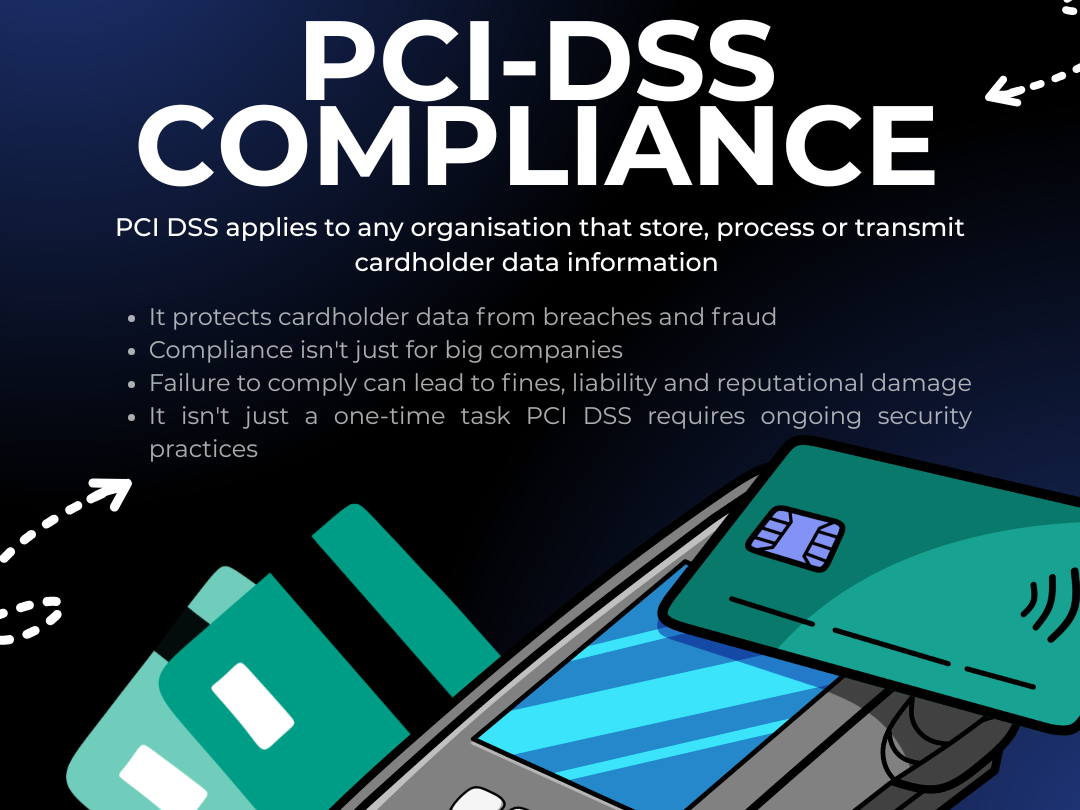
Understanding PCI DSS is essential to your security posture and your bottom line. In today's digital-first economy, businesses of all sizes process millions of card transactions every day. Behind every swipe, tap, or click lies a complex web of sensitive financial data and protecting that data is not optional. That's where PCI DSS comes in. Whether you're a startup accepting your first online payment or a global enterprise handling billions in transactions.
What Is PCI DSS?
Payment Card Industry Data Security Standard is a globally recognized framework of security requirements designed to protect cardholder data. Established in 2004 by the PCI Security Standards Council (PCI SSC) a body founded by the five major card brands (Visa, Mastercard, American Express, Discover, and JCB) PCI DSS sets the baseline for how organizations must handle, store, process, and transmit credit and debit card information.
In short, if your business touches payment card data in any way, this certification applies to you.
Why does this certification matter?
Card fraud and data breaches cost the global economy tens of billions of dollars each year. When cardholder data is compromised, the consequences ripple outward customers lose trust, businesses face enormous fines, and card brands may revoke a company's ability to process payments altogether.
PCI DSS exists to break that cycle. By mandating a consistent set of security controls across all entities in the payment ecosystem, PCI DSS reduces the risk of breaches, limits the scope of damage when incidents do occur, and creates a culture of ongoing security accountability.
Beyond compliance, achieving this certification signals to customers, partners, and regulators that your organization takes data security seriously a competitive advantage that is increasingly difficult to ignore.
The Core Requirements of PCI DSS
The current version, PCI DSS v4.0, released in 2022, organizes its requirements around six core goals and twelve primary requirements. These cover a broad range of security domains:
1. Build and Maintain a Secure Network and Systems: Install and maintain network security controls such as firewalls and avoid using vendor-supplied default credentials.
2. Protect Account Data: Protect stored cardholder data and encrypt transmission of cardholder data across open, public networks.
3. Maintain a Vulnerability Management Program: Protect systems and networks from malicious software and develop and maintain secure systems and software.
4. Implement Strong Access Control Measures: Restrict access to system components and cardholder data based on business need, identify users and authenticate access, and restrict physical access to cardholder data.
5. Regularly Monitor and Test Networks: Log and monitor all access to system components and cardholder data, and test security of systems and networks regularly.
6. Maintain an Information Security Policy: Support information security with organizational policies and programs.
PCI DSS v4.0 also introduced a new customised approach, giving mature organizations more flexibility to meet the intent of each requirement using innovative controls tailored to their environment.
Who Needs to Comply with PCI DSS?
PCI DSS applies to any organisation that stores, processes, or transmits cardholder data including merchants, payment processors, acquirers, issuers, and service providers. The level of compliance required depends on transaction volume, broken down into four merchant levels:
- Level 1: Over 6 million transactions per year
- Level 2: 1 to 6 million transactions per year
- Level 3: 20,000 to 1 million e-commerce transactions per year
- Level 4: Fewer than 20,000 e-commerce transactions or up to 1 million other transactions per year
Higher-volume merchants face more rigorous assessment requirements, including annual on-site audits by a Qualified Security Assessor (QSA), while smaller merchants may self-assess using a Self-Assessment Questionnaire (SAQ). if you need some more info please view
Common Compliance Challenges
Achieving and maintaining PCI DSS compliance is not a one-time event it is an ongoing process. Organizations commonly struggle with:
- Scoping complexity: Accurately defining which systems fall within the cardholder data environment (CDE) is one of the most challenging aspects of PCI DSS. Overly broad scoping inflates cost and effort; under-scoping creates risk.
Cyberensic are leaders in PCI DSS compliance drop us line today for your free 30-minute assessment